


In modern society, chronic emotional stress has become a significant factor affecting human health. An increasing number of clinical observations have found that cancer patients who experience prolonged negative emotional states, such as depression, anxiety, or loneliness, often exhibit faster tumor progression and poorer treatment outcomes. Although the hypothalamic–pituitary–adrenal (HPA) axis is widely recognized as a central mediator linking psychological stress to physiological responses, the precise mechanisms by which emotions transcend biological systems and reshape the tumor immune microenvironment at the molecular level have remained a major focus in the field of tumor immunology.
Recently, a research team led by Professors Junbo Hu and Guihua Wang from Tongji Hospital published a study online in the international journal Cell Metabolism titled “Pregnenolone Promotes Immune Evasion Through Blocking Endogenous Retrovirus Expression.” The study provides an in-depth explanation of a previously unrecognized mechanism by which chronic emotional stress induces the accumulation of the steroid hormone precursor pregnenolone (P5), leading to the epigenetic silencing of endogenous retroviruses (ERVs) and ultimately promoting tumor immune evasion.
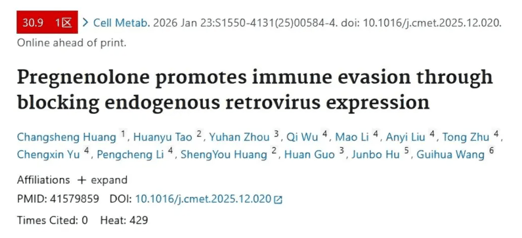
Read more about the research: https://www.cell.com/cell-metabolism/abstract/S1550-4131(25)00584-4
Research Findings
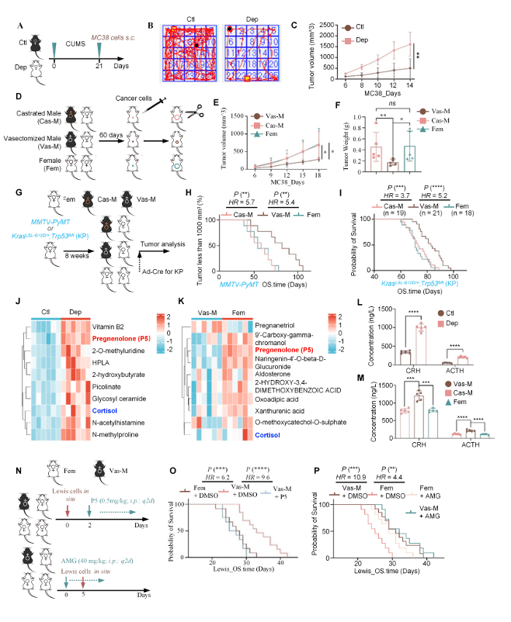
1. Chronic Emotional Stress Drives Pregnenolone Accumulation Through Activation of the HPA Axis
Using multiple mouse models that mimic chronic emotional stress, the researchers observed that stress significantly accelerated tumor growth and induced resistance to immune checkpoint blockade (ICB) therapy. Through untargeted metabolomic profiling, they identified abnormally elevated levels of pregnenolone (P5) in the plasma of stressed mice.
Further experiments confirmed that chronic emotional stress activates the hypothalamic–pituitary–adrenal (HPA) axis, stimulating the adrenal glands to synthesize and release P5. Analysis of clinical samples revealed that patients with higher emotional stress scores also exhibited significantly elevated P5 levels, which were strongly associated with poorer clinical outcomes.
2. Pregnenolone Directly Binds to and Stabilizes the Kap1 Protein
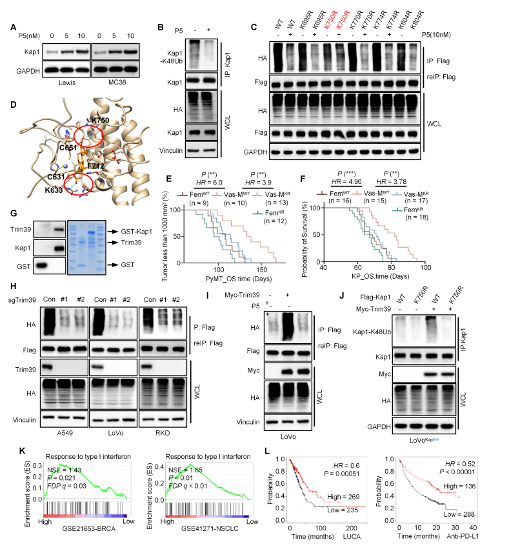
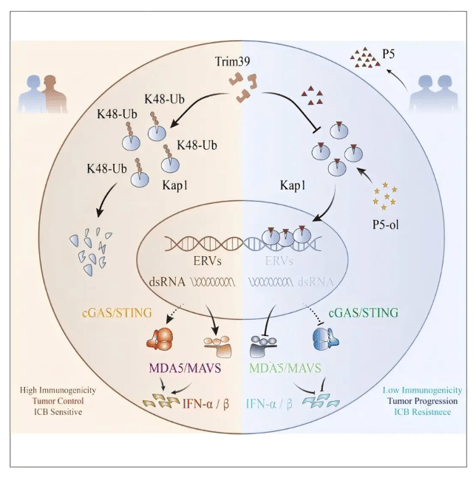
At the molecular level, the study found that P5 does not act through conventional steroid hormone receptors. Instead, it directly binds to the transcriptional corepressor Kap1.
This interaction protects Kap1 from degradation by the E3 ubiquitin ligase Trim39, thereby markedly increasing its intracellular stability. Stabilized Kap1 subsequently recruits Setdb1 and Hdac1 to form a repressive chromatin complex, promoting H3K9me3 deposition at specific genomic loci. As a result, endogenous retroviruses (ERVs), which normally contribute to immune activation, become epigenetically silenced.
3. ERV Silencing Promotes a “Cold Tumor” Phenotype and Immune Evasion
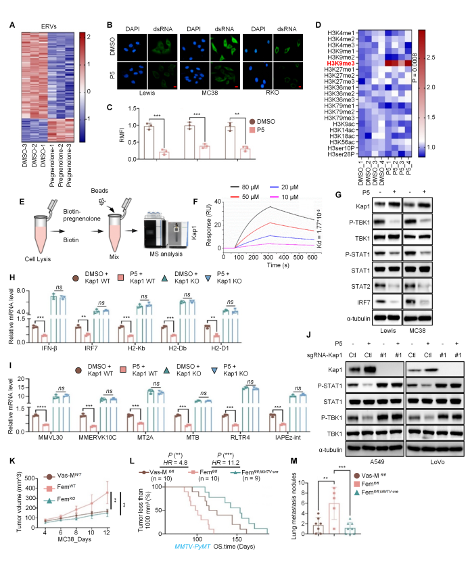
Under normal conditions, ERV transcription and replication generate double-stranded RNA (dsRNA), which activates innate immune sensing pathways such as cGAS–STING and MDA5–MAVS.
However, under chronic stress-induced P5 accumulation, ERV expression is suppressed, leading to a substantial reduction in type I interferon (IFN-I) production. This shift transforms tumors from immunologically “hot” to “cold,” significantly reducing their immunogenicity. Consequently, CD8⁺ T-cell infiltration and effector function are impaired, allowing tumors to evade immune surveillance.
4. Targeting P5 Signaling: A New Opportunity to Improve Immunotherapy Under Stress Conditions
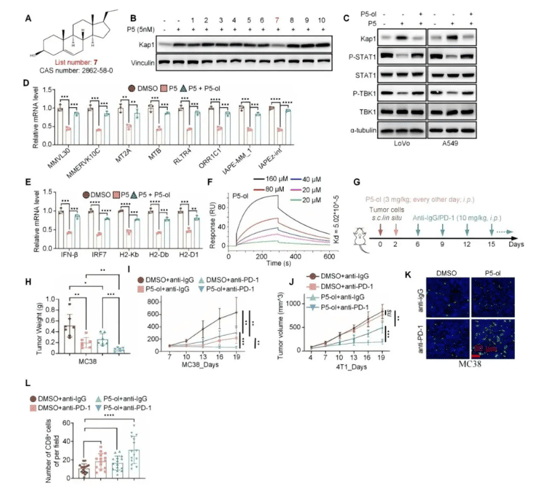
To evaluate the therapeutic potential of this pathway, the researchers tested a P5 antagonist in preclinical models. The results were promising: inhibition of P5 signaling restored ERV expression, reactivated interferon responses, and significantly enhanced the antitumor efficacy of anti-PD-1 therapy.
These findings suggest a potential combination treatment strategy for cancer patients experiencing chronic psychological stress who respond poorly to immunotherapy.
5. Conclusion
This study is the first to uncover a comprehensive regulatory axis linking emotion, neural signaling, endocrine responses, metabolism, epigenetic regulation, and immunity.
The findings demonstrate that pregnenolone, a stress-associated metabolic product generated during chronic emotional stress, promotes tumor growth and immune evasion by suppressing ERVs—a critical source of tumor immunogenicity. By revealing this previously unrecognized mechanism, the study highlights the biological significance of psychological interventions in cancer care and provides a strong scientific foundation for developing novel metabolic-targeted therapies aimed at enhancing the efficacy of cancer immunotherapy.
ABclonal Products Supporting This Study
ABclonal is honored to have supported this study with high-quality products and to serve as a trusted partner throughout the research journey. We look forward to continuing to provide this team with comprehensive solutions, from antibodies to assay kits, while empowering more cutting-edge scientific discoveries through high-quality products and dedicated technical support, together advancing innovation in cancer immunotherapy.
|
Catalogue Number |
Product Name |
Applications |
Species |
CYP11A1 Rabbit mAb |
WB, ELISA |
Human, Mouse |
|
| A2752 |
WB, IF-P, ELISA |
Human, Mouse, Rat |
|
| A3606 |
K48-linkage Specific Ubiquitin Rabbit mAb |
WB, IF/ICC, ELISA |
Human |
| [KD Validated] STAT2 Rabbit mAb |
WB, ELISA |
Human, Rat |
|
|
CBX1/HP1 beta Rabbit mAb |
WB, IHC-P, ELISA |
Human, Mouse, Rat |
|
| A19686 |
Ubiquitin Rabbit mAb |
WB, IHC-P, ELISA |
Human, Mouse, Rat |
| A19056 | GAPDH Rabbit mAb (High Dilution) |
WB, IHC-P, IF/ICC, ELISA |
Human, Mouse, Rat |
|
α-Tubulin Rabbit pAb |
WB, IF/ICC |
Human, Mouse, Rat |
|
| AE006 | Rabbit anti GST-Tag pAb |
WB, IP |
Species independent |
| HRP-conjugated Goat anti-Mouse IgG Light Chain | WB |
Mouse |
|
| HRP-conjugated Mouse anti-Rabbit IgG Light Chain | WB, IP | Rabbit | |
| ABScript III RT Master Mix for qPCR with gDNA Remover | / | / |