


The NLRP3 inflammasome, a key component of the innate immune system, plays a central role in recognizing pathogen invasion and cellular damage signals, thereby initiating host immune defense. Upon activation, the NLRP3 inflammasome promotes the maturation of the pro-inflammatory cytokines interleukin-1β (IL-1β) and interleukin-18 (IL-18). It also induces pyroptosis, an inflammatory form of programmed cell death, through the cleavage of Gasdermin D (GSDMD), facilitating the elimination of infected or damaged cells and limiting pathogen spread.
In this article, we will take an in-depth look at the structural characteristics of the NLRP3 inflammasome and its associated protein complexes. We will also examine the molecular mechanisms underlying its assembly and activation, with a particular focus on the critical role of NIMA-related kinase 7 (NEK7) in promoting NLRP3 inflammasome activation.
Components and Functions of the NLRP3 Inflammasome
The NLRP3 inflammasome is a supramolecular complex composed of multiple protein molecules. Its primary function is to detect danger signals originating from within or outside the cell and initiate the corresponding inflammatory response. The complex consists mainly of three core components that work together to mediate inflammasome assembly and activation:
1. Sensor: NLRP3 Protein
NLRP3 (Nucleotide-binding domain, Leucine-rich repeat-containing protein 3) is the central sensor of the NLRP3 inflammasome and a member of the NLR (nucleotide-binding domain- and leucine-rich repeat-containing protein) family. NLRP3 can directly or indirectly recognize a wide range of danger signals, including pathogen-associated molecular patterns (PAMPs), such as bacterial lipopolysaccharide (LPS) and viral nucleic acids, as well as damage-associated molecular patterns (DAMPs), including extracellular ATP, monosodium urate crystals, and cholesterol crystals.
The NLRP3 protein consists of the following structural domains:

Figure 1. Structure of NLRP3
① N-terminal Pyrin domain (PYD):
Responsible for homotypic protein-protein interactions, particularly binding to the PYD of the adaptor protein ASC. This interaction serves as the initiating step in inflammasome assembly.
② Central NACHT domain:
Contains the nucleotide-binding domain (NBD), which is responsible for ATP/ADP binding and hydrolysis. This domain is essential for NLRP3 oligomerization.
③ C-terminal leucine-rich repeat (LRR) domain:
Primarily mediates protein-protein interactions and plays an important role in maintaining the structural stability of NLRP3. The LRR domain also participates in sensing danger signals.
Upon recognizing danger signals, NLRP3 undergoes conformational changes that promote its oligomerization. This process represents the first step in NLRP3 inflammasome assembly and provides the foundation for the subsequent recruitment of ASC and Caspase-1.
2. Adaptor protein: ASC
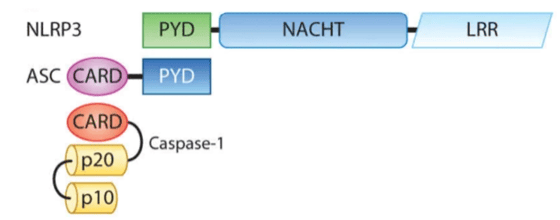
Figure 2. The sensor–adaptor–effector complex of the NLRP3 inflammasome
ASC (apoptosis-associated speck-like protein containing a caspase recruitment domain) is a key adaptor protein in the NLRP3 inflammasome, forming an essential molecular bridge between NLRP3 and the effector protein Caspase-1.
ASC contains two domains:
① N-terminal PYD domain:
Binds to the PYD domain of activated NLRP3 through homotypic PYD–PYD interactions.
② C-terminal caspase recruitment domain (CARD):
Recruits and binds to the CARD domain of Caspase-1 through homotypic CARD–CARD interactions.
Activated NLRP3 recruits the PYD domain of ASC through its own PYD domain, inducing ASC to assemble into amyloid-like filamentous structures. These ASC filaments serve as a platform for the further recruitment and concentration of Caspase-1 molecules, thereby promoting Caspase-1 activation.
3. Effector protein: Caspase-1
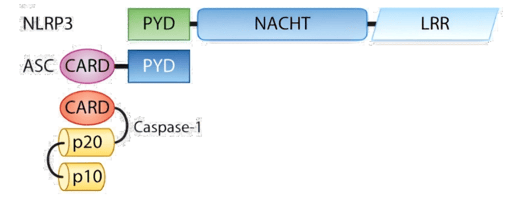
Figure3. The Sensor–Adaptor–Effector Complex of the NLRP3 Inflammasome
Caspase-1 is the terminal effector molecule of the NLRP3 inflammasome pathway. It is a cysteine protease that is recruited to and activated within the inflammasome complex.
Caspase-1 contains the following domains:
① N-terminal CARD domain:
Interacts with the CARD domain of ASC through homotypic CARD–CARD interactions, allowing Caspase-1 to be recruited to the inflammasome complex.
② Large catalytic subunit (p20) and small catalytic subunit (p10):
Upon activation, Caspase-1 undergoes autocleavage to generate the active p20/p10 heterodimer, forming the mature protease with catalytic activity.
Activated Caspase-1 performs two major functions:
① Maturation of pro-inflammatory cytokines:
Caspase-1 cleaves pro-interleukin-1β (pro-IL-1β) and pro-interleukin-18 (pro-IL-18) into their biologically active forms, IL-1β and IL-18. These cytokines are potent pro-inflammatory mediators that drive inflammatory responses.
② Induction of pyroptosis:
Caspase-1 cleaves gasdermin D (GSDMD), releasing its N-terminal fragment, which inserts into the plasma membrane to form pores. This leads to the leakage of intracellular contents and triggers pyroptosis, a highly inflammatory form of programmed cell death. Pyroptosis plays a critical role in eliminating infected or damaged cells; however, excessive activation can also result in tissue injury.
Activation Mechanism
The activation of the NLRP3 inflammasome is a complex and tightly regulated multistep process that enables the host to rapidly initiate inflammatory responses when needed while preventing unnecessary self-damage. This mechanism can be broadly divided into the following key stages:
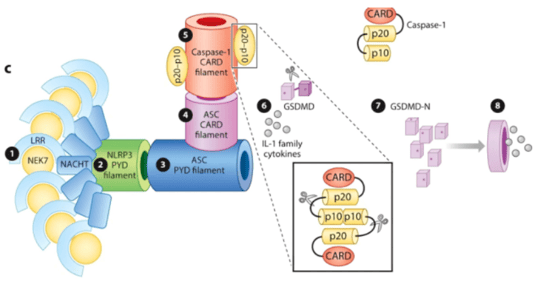
Figure 4. Molecular Model of the NLRP3 Inflammasome Pathway
1. Priming Signal and Upregulation of NLRP3 Expression
Activation of the NLRP3 inflammasome typically requires an initial priming signal. This signal is commonly triggered when pathogen-associated molecular patterns (PAMPs) or damage-associated molecular patterns (DAMPs) are recognized by pattern recognition receptors (PRRs), or through stimulation by inflammatory cytokines. Priming activates transcription factors such as NF-κB, leading to the upregulation of NLRP3 and other inflammasome-related genes. In addition, post-translational modifications of NLRP3, including ubiquitination, phosphorylation, and SUMOylation, "license" or prime NLRP3 during this stage, maintaining it in an autoinhibited state until a second activation signal is received.
2. NLRP3 Oligomerization and Formation of the Inactive Cage Structure
Following priming, cellular NLRP3 protein levels increase. Under resting conditions, NLRP3 molecules preferentially assemble into an inactive oligomeric cage structure, which is considered the resting state of the protein and effectively prevents spontaneous activation. Structural studies have shown that murine NLRP3 can form hexameric, heptameric, and octameric double-ring cage structures, whereas human NLRP3 is proposed to assemble into a decameric cage. Within these assemblies, the PYD domains of NLRP3 are flexibly linked and sequestered inside the cage cavity, preventing productive interaction with ASC. This structural organization ensures that NLRP3 remains inactive in the absence of authentic activating stimuli. NLRP3 oligomerization is also associated with intracellular vesicle trafficking and dispersion of the trans-Golgi network (TGN), both of which represent critical early events during inflammasome activation.
3. Secondary Activation Signal and the Role of NEK7
Full activation of NLRP3 requires a second activation signal. These stimuli include bacterial toxins (e.g., nigericin), extracellular ATP, monosodium urate crystals, cholesterol crystals, and other particulate substances, which commonly induce intracellular potassium efflux or other ionic perturbations.
At this stage, NIMA-related kinase 7 (NEK7) plays an indispensable role. NEK7 is a serine/threonine kinase that directly binds to NLRP3 and promotes its activation. Specifically, the C-terminal domain of NEK7 interacts with both the LRR domain and the HD2 region of the NACHT domain of NLRP3. Importantly, NEK7 binding is mutually exclusive with formation of the inactive NLRP3 cage structure. Once NLRP3 is transported to the microtubule-organizing center (MTOC) and colocalizes with NEK7, NEK7 competitively binds the LRR domain, disrupting the inactive cage assembly and triggering cage disassembly or structural opening.
4. Assembly of the Active NLRP3 Disk Structure
Following release from autoinhibition by NEK7, NLRP3 undergoes dramatic conformational rearrangements, transitioning from an inactive cage structure into an active disk structure. During this activation process, the WHD-HD2-LRR region undergoes an approximately 85.4° rigid-body rotation. Meanwhile, the FISNA region within the NACHT domain, which is partially disordered in the inactive state, becomes fully ordered upon activation and participates in ATP binding as well as intermolecular interactions between NLRP3 molecules, thereby stabilizing the disk structure. Formation of the active disk is typically accompanied by ATP binding, in contrast to the ADP-bound inactive state. This activated disk serves as the structural platform for recruiting downstream signaling molecules.
5. Recruitment of ASC and Formation of PYD–PYD Filaments
The activated NLRP3 disk exposes its PYD domain, which functions as a nucleation seed to recruit cytosolic ASC molecules. Through homotypic PYD–PYD interactions, the PYD domain of NLRP3 binds the PYD domain of ASC, initiating ASC oligomerization into helical ASC PYD filaments. Filament assembly follows a nucleation-polymerization mechanism in which electrostatic complementarity and structural compatibility enable efficient recruitment and assembly of ASC molecules.
6. Recruitment of Caspase-1 and Formation of CARD–CARD Filaments
Assembly of ASC PYD filaments promotes clustering of the ASC CARD domains. These clustered CARD domains serve as a scaffold that recruits and concentrates cytosolic Caspase-1 through homotypic CARD–CARD interactions. Binding of the CARD domain of Caspase-1 to the CARD domain of ASC induces the formation of helical Caspase-1 CARD filaments, bringing multiple Caspase-1 molecules into close proximity.
7. Caspase-1 Activation and Processing of Downstream Effectors
Formation of Caspase-1 CARD filaments enables dimerization of the catalytic p20 and p10 subunits, followed by autocleavage to generate fully active mature Caspase-1 with proteolytic activity. Activated Caspase-1 subsequently performs its major effector functions.
① Maturation of IL-1β and IL-18
Caspase-1 cleaves pro-IL-1β and pro-IL-18 into their mature, biologically active forms, thereby amplifying inflammatory signaling.
② GSDMD Cleavage and Pyroptosis
Caspase-1 cleaves gasdermin D (GSDMD) to generate its pore-forming N-terminal fragment. These fragments insert into the plasma membrane to form large pores, resulting in cell swelling, membrane rupture, and ultimately pyroptosis. The GSDMD pores also provide a conduit for the secretion of mature IL-1β and IL-18.
Through this highly coordinated molecular mechanism, the NLRP3 inflammasome efficiently senses danger signals and initiates inflammatory responses and pyroptotic cell death, thereby playing an indispensable role in innate immune defense. A deeper understanding of these structural and mechanistic processes provides valuable insights for the development of therapeutic strategies targeting the NLRP3 inflammasome.
Inflammasome Signaling Pathway-related Antibodies
|
Catalogue Number |
Product Name |
Applications |
Species |
| A28144 | NLRP3 Rabbit mAb | WB, IP, ELISA | Human |
| A24294 | NLRP3 Rabbit mAb | WB, IF/ICC, IP, ELISA | Mouse |
| A28419 | NLRP6 Rabbit mAb | WB, ELISA | Human |
| A22046 | ASC/TMS1 Rabbit mAb | WB, IHC-P, ELISA | Human, Mouse, Rat |
| A23429 | Cleaved Caspase-1 p20 Rabbit mAb | WB, ELISA | Human |
| A25308 | pro Caspase-1 + p10 + p12 Rabbit mAb | WB, IP, ELISA | Human, Mouse |
| A27901 | Caspase-1 Rabbit mAb | WB, ELISA | Human |
| A28207 | Caspase-1 Rabbit mAb | WB, ELISA | Mouse |
| A28849 | Caspase-1 Rabbit mAb | WB, ELISA | Mouse, Rat |
| A19654 | [KO Validated] Caspase-3 Rabbit mAb | WB, ELISA | Human, Mouse |
| A19664 | Caspase-3 Rabbit mAb | WB, IHC-P, ELISA | Human, Mouse, Rat |
| A11021 | Active Caspase-3 Rabbit mAb | WB, ELISA | Human |
| A27958 | Cleaved Caspase-8 (Asp384) Rabbit mAb | WB, ELISA | Human |
| A27676 | IL1β Rabbit mAb | WB, IF/ICC, IHC-P, ELISA | Human, Mouse, Rat |
| A25874 | IL1β Rabbit mAb | WB, IF/ICC, ELISA | Human |
| A22257 | IL1β Rabbit mAb | WB, IF/ICC, ELISA | Mouse |
| A24169PM | IL18 Rabbit PolyAb® | WB, IF/ICC, IF-P, IHC-P, ELISA | Human, Mouse, Rat |
| A23076 | IL18 Rabbit mAb | WB, IHC-P, ELISA | Human, Mouse, Rat |
| A24057 | Cleaved IL-18 (Tyr37) Rabbit mAb | WB | Human |
| A20728 | GSDMD (Full Length + C Terminal) Rabbit mAb | WB, ELISA | Human |
| A24059 | [KO Validated] Cleaved Gasdermin D (N Terminal) Rabbit mAb | WB, IF/ICC, ELISA | Human |
| A26924 | Cleaved Gasdermin D (Gly276) Rabbit mAb | WB, ELISA | Human |
| A28234 | Cleaved Gasdermin D (C Terminal) Rabbit mAb | WB, IP, ELISA | Mouse |
| A26197 | [KO Validated] Cleaved Gasdermin E (N Terminal) Rabbit mAb | WB, IHC-P, ELISA | Human |
| A28230 | [KO Validated] GSDME (Full Length + N Terminal) Rabbit mAb | WB, IP, IHC-P, ELISA | Human |
| A24342 | Cleaved Gasdermin B (C Terminal) Rabbit mAb | WB, ELISA | Human |
| A22624 | GSDMA Rabbit mAb | WB, IF-P, ELISA | Human, Mouse |
Inflammasome Signaling Pathway ELISA Kits
|
Catalogue Number |
Product Name |
Applications |
Species |
| RK00001 | Human IL-1 beta ELISA Kit | IL-1β | Human |
| RK00176 | Human IL-18 ELISA Kit | IL-18 | Human |
| RK00030 | Human TNF-alpha ELISA Kit | TNF-α | Human |
| RK01939 | Human NLR Family, Pyrin Domain Containing Protein 3 (NLRP3) ELISA Kit | NLRP3 | Human |
| RK01035 | Human Caspase-1 ELISA Kit | Caspase-1 | Human |
| RK01517 | Human Gasdermin D ELISA Kit (GSDMD) | GSDMD | Human |
| RK00006 | Mouse IL-1 beta ELISA Kit | IL-1β | Mouse |
| RK00104 | Mouse IL-18 ELISA Kit | IL-18 | Mouse |
| RK00027 | Mouse TNF-alpha ELISA Kit | TNF-α | Mouse |
| RK13406 | Mouse NLRP3/NALP3 ELISA Kit | NLRP3 | Mouse |
| RK02661 | Mouse Caspase-1 (CASP1) ELISA Kit | Caspase-1 | Mouse |
| RK00009 | Rat IL-1 beta ELISA Kit | IL-1β | Rat |
| RK09324 | Rat IL-18 ELISA Kit | IL-18 | Rat |
| RK00029 | Rat TNF-alpha ELISA Kit | TNF-α | Rat |