Sep 10, 2018, 9:30:00 AM       by Michele Mei

7 Minute Bio-Update: How Ebola Works

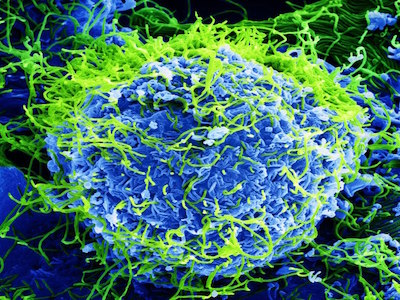
Ebola outbreaks are considered rare, but they do emerge every several years and can be quite lethal. Although the first confirmed Ebola epidemic was in 1976, we still lack licensed therapeutics to prevent and control Ebola’s spread. Vaccine development is in the works, but the lack of an approved treatment is a chilling reminder that we may not know enough about the virus. With the recent outbreaks in mind, we sought to summarize everything you should know about Ebola, its biology, and the current progress of vaccine development.


Sep 4, 2018, 6:05:05 PM       by Panyue (Penny) Hao

Featured Product Weekly: MAPK/ERK Pathway Antibody

The extracellular signal-regulated kinases, or ERK1/2 (MAPK1/MAPK3, p44/42MAPK), are signaling molecules belonging to the mitogen-activated protein kinase family (MAPKs) that are commonly located in the cytoplasm of eukaryotic cells. In concert with various other molecules in the signaling cascade acting under different surface or intracellular receptors, ERK1/2 act as catalysts in the phosphorylation of serine/threonine and are negatively regulated by the bispecific (Thr/Tyr) MAPK phosphatase family (called DUSP or MKP) and specific inhibitors to MEK activity (such as U0126 and PD98059).


Aug 29, 2018, 10:00:00 AM       by Michele Mei

4 Famous Scientists and How They Struggled

When I began my science journey as an undergrad, research seemed rigorous, but reassuringly straightforward in its tenets. Observe, question, hypothesize. Predict, test, analyze. And repeat. It made perfect sense to me that if you followed this protocol and remained unbiased in the process, great discoveries were sure to come.

But then I learned about the other steps in between. Steps like grant-writing, worrying about publishing and impact factors, getting your mentor to actually respond, and struggling to troubleshoot experiments. Twitter’s PhD community seems to relate.


Aug 28, 2018, 9:00:00 AM       by Panyue (Penny) Hao

Featured Product Weekly: DNA Methyltransferase Antibody

DNA methyltransferase (DNMT) is an important family of enzymes that catalyze and maintain DNA methylation, a common marker in the epigenetic silencing of target genes. The enzymes play a key role in the regulation of gene expression and genomic imprinting/development.


Aug 21, 2018, 10:00:00 AM       by Panyue (Penny) Hao

Featured Product Weekly: Astrocyte Markers

Astrocytes are specialized glial cells with distinct morphology that are found in the central nervous system, playing a role in brain and nerve cell development and the formation of synapses. Mature astrocytes respond to many stress signals and are responsible for many essential complex functions in the healthy brain, allowing the maintenance of proper homeostasis through ion flow, signaling, and the recycling of neurotransmitters. Astrocytes that are irregularly activated may result in various neurological disorders, including Alzheimer's disease and Huntington's disease. 

Glial fibrillary acidic protein (GFAP) is an intermediate filament protein that is mainly found in astrocytes. It is also expressed in chondrocytes, fibroblasts, myoepithelial cells, lymphocytes, and hepatic stellate cells.


Aug 14, 2018, 9:45:00 AM       by Panyue (Penny) Hao

Featured Product Weekly: KO-validated ErbB Antibodies

Epidermal growth factor receptor (EGFR, also known as ErbB-1 or HER1) is a member of the ErbB family. This family includes four tyrosine receptor kinases: HER1 (ErbB1, EGFR), HER2 (ErbB2, NEU), HER3 (ErbB3), and HER4 (ErbB4). The ErbB family plays an important regulatory role in the process of cell physiology, and is among the most studied receptor tyrosine kinases and signaling molecules in the history of biochemistry and cell biology.

EGFR is distributed along the surface of cells including mammalian epithelial cells, fibroblasts, glial cells, keratinocytes, and more. The EGFR signaling pathway plays an important role in physiological processes such as cell growth, proliferation and differentiation. Upon ligand binding (for example, EGF interacting with the extracellular domain of EGFR), the ErbB receptor tyrosine kinases will homodimerize or heterodimerize, allowing autophosphorylation of cytosolic tyrosine residues and the recruitment of downstream signaling molecules.

The loss of function in tyrosine kinases such as EGFR, or the abnormal activity/cell localization of key factors in related signaling pathways, such as the p38 MAPK pathway, can cause multiple cancer types, diabetes, immunodeficiency and cardiovascular diseases. In modern medicine, typical treatment strategies include targeting the tyrosine kinase activity of the ErbB receptor with small molecular inhibitors, or humanized antibodies that will target cells that have overexpressed the ErbB receptor, such as using an anti-HER2 therapy to treat breast cancer.